
Here's a question worth thinking about. When was the last time you didn't open a text message? Most of us check every SMS within minutes, even if we ignore emails for days. That's the quiet power of text messaging, and it's exactly why BULK SMS remains one of the most effective communication tools for businesses, even in a world full of apps and social media.
But not all SMS messages are the same. There's a big difference between a message verifying your login and a message announcing a weekend sale. There's also a difference in how these messages are sent — through short numbers, long numbers, personalized content, or even across borders.
In this guide, we'll break down every major type of SMS service a business can use, from OTP verification to international messaging, and show how Mishtel brings all of it together in one simple platform. This is a detailed read, so let's go step by step.
1. What Is Bulk SMS and Why Does It Still Matter?
Bulk SMS means sending text messages to a large number of people at once, through a single platform, instead of typing and sending each message manually.
Businesses rely on Bulk SMS for many everyday needs:
Sending reminders and confirmations
Sharing offers and updates
Verifying customer identity
Running large-scale marketing campaigns
What makes SMS special is its simplicity. It doesn't need Wi-Fi. It doesn't need an app. It works on any phone, from the newest smartphone to the most basic handset. This universal reach is why BULK SMS continues to be a core communication channel for businesses of every size.
2. OTP: The Simplest Way to Prove It's Really You
Let's start with one of the most trusted uses of SMS — OTP, or One-Time Password.
Every time someone logs into an app, resets a password, or completes a payment, a short code often arrives by text to confirm their identity. This single step protects both the business and the customer from fraud.
Why OTP Through SMS Works So Well
Instant delivery — codes typically arrive within seconds
No extra app needed — every phone can receive SMS
High trust — customers are familiar with this verification method
Reliable reach — works even on basic phones without internet
For any platform that handles logins, banking, or sensitive account actions, a dependable OTP system isn't optional. A slow or failed OTP can mean a frustrated customer who gives up halfway through signing up.
3. Transactional SMS: Messages Customers Actually Expect
Not every SMS is meant to sell something. Sometimes, a business simply needs to share important information — and that's called transactional messaging.
Transactional SMS covers messages customers are already expecting, such as:
Order and delivery confirmations
Payment receipts and billing alerts
Appointment and booking reminders
Service updates and outage notices
The key difference here is intent. Customers don't see transactional messages as marketing. They see them as useful updates, which builds trust over time. A well-managed Transactional SMS system ensures these important messages are delivered quickly and accurately, every single time.
4. Promotional SMS: Driving Sales Directly to the Phone
On the other side of the spectrum is promotional SMS — messages designed to attract attention and drive action, like discounts, festival offers, or new product launches.
What Makes Promotional SMS Effective
Keeping the message short and easy to understand
Including a clear offer or reason to act now
Sending at the right time, without overwhelming customers
Adding a simple next step, like a link or code
Since SMS lands directly on a customer's phone screen, there's no algorithm deciding whether they see it, unlike social media posts. Used thoughtfully, Promotional SMS can create a real, measurable boost in sales, especially during high-demand periods like festive sales or limited-time offers.
5. Smart Link: Turning a Simple Text Into a Measurable Tool
In the past, businesses sent an SMS and had no idea what happened next. Did the customer read it? Did they take action? There was no way to know.
That's the problem Smart Link solves.
A Smart Link is a trackable link placed inside an SMS. When a customer taps it, the business can see how many people clicked, when they clicked, and often what device they used. This turns a basic message into a source of real data.
Why Smart Link Matters
Tracks genuine engagement, not just delivery
Helps identify which campaigns actually perform
Supports smarter, data-driven marketing decisions
Shortens long URLs for a cleaner, more trustworthy message
For any business running SMS campaigns, adding a Smart Link means moving from guesswork to measurement.
6. Short Code: Fast, Simple, and Easy to Remember
Have you ever seen a brand ask you to text a five-digit number for an offer? That's a short code in action.
A Short Code is a short, easy-to-remember number, usually four to six digits, used for high-volume SMS campaigns. Because it's short, customers find it easy to recall and type, which makes it ideal for large-scale promotional or engagement campaigns.
Common Uses of Short Code
Voting and contest campaigns
Quick opt-in and subscription services
High-traffic marketing promotions
Two-way SMS interactions with customers
Because short codes can handle a very high volume of messages quickly, they're often the preferred choice for time-sensitive, large-scale campaigns.
7. Long Code: A Familiar Number for Everyday Communication
While short codes are built for speed and scale, a long code offers something different — familiarity.
A Long Code looks like a regular ten-digit phone number. Customers often find it more personal and approachable, since it resembles a number they might already have saved or recognize.
When Businesses Choose Long Code
Sending personalized, one-to-one style messages
Running local or regional campaigns
Supporting two-way conversations with individual customers
Situations where a short code isn't practical or necessary
Long codes work especially well when a business wants messaging to feel more like a personal conversation rather than a mass broadcast.

8. Dynamic SMS: Personalizing Every Message
Sending the same generic message to everyone is no longer enough. Customers respond better when a message feels like it was written just for them. This is exactly what dynamic SMS delivers.
Dynamic SMS allows businesses to insert personalized details into each message, such as a customer's name, order number, appointment time, or account balance, automatically, without manually writing each text.
Benefits of Dynamic SMS
Higher engagement, since messages feel personal
Reduces confusion with accurate, specific details
Saves time compared to manually customizing messages
Works well for reminders, confirmations, and account updates
A simple message like "Hi Raj, your order #4521 has shipped" feels far more trustworthy than a generic broadcast, and dynamic SMS makes this possible at scale.
9. International SMS: Reaching Customers Beyond Borders
Business doesn't stop at national boundaries anymore. Many companies now serve customers across multiple countries, and that means messaging needs to work everywhere too.
International SMS allows businesses to send messages to customers in other countries, reliably and without complicated setup for each region.
Why International SMS Is Important
Supports global businesses and remote teams
Keeps international customers informed and engaged
Useful for travel, logistics, and export-based businesses
Maintains consistent communication across markets
For businesses expanding beyond their home country, a reliable international SMS system ensures that distance never becomes a communication barrier.
10. Flash SMS: Messages That Demand Immediate Attention
Most text messages sit in the inbox until the customer opens them. But sometimes, a business needs a message seen right away. That's where flash SMS comes in.
A Flash SMS appears directly on the customer's screen without needing to be opened or saved, making it ideal for urgent, time-sensitive information.
When to Use Flash SMS
Urgent alerts or emergency notifications
Time-limited OTPs during high-security transactions
Critical service disruptions or outages
Short-term flash sales requiring immediate attention
Because flash messages interrupt the screen directly, they're best used sparingly, for situations that truly need instant visibility.
11. Choosing the Right SMS Type for Your Business
With so many SMS options available, it helps to match the tool to the actual need rather than using one type for everything.
If your priority is account security, start with a reliable OTP system. If customers need order or service updates, Transactional SMS is the right fit. For marketing and offers, Promotional SMS paired with a Smart Link gives you both reach and measurable results.
If your campaigns need scale and speed, a Short Code works best, while a Long Code suits more personal, ongoing conversations. Businesses that want every message to feel personalized should use Dynamic SMS, and those operating across borders need a dependable International SMS setup. Finally, for anything truly urgent, Flash SMS ensures the message can't be missed.
Most businesses don't need every type of SMS at once. It's common to start with OTP and transactional messaging for reliability, then gradually add promotional campaigns, smart links, and personalization as the business grows.
12. How Mishtel Brings All SMS Services Together
Managing all these different SMS types separately, across different providers, quickly becomes complicated. This is exactly why businesses turn to Mishtel for a single, reliable platform.
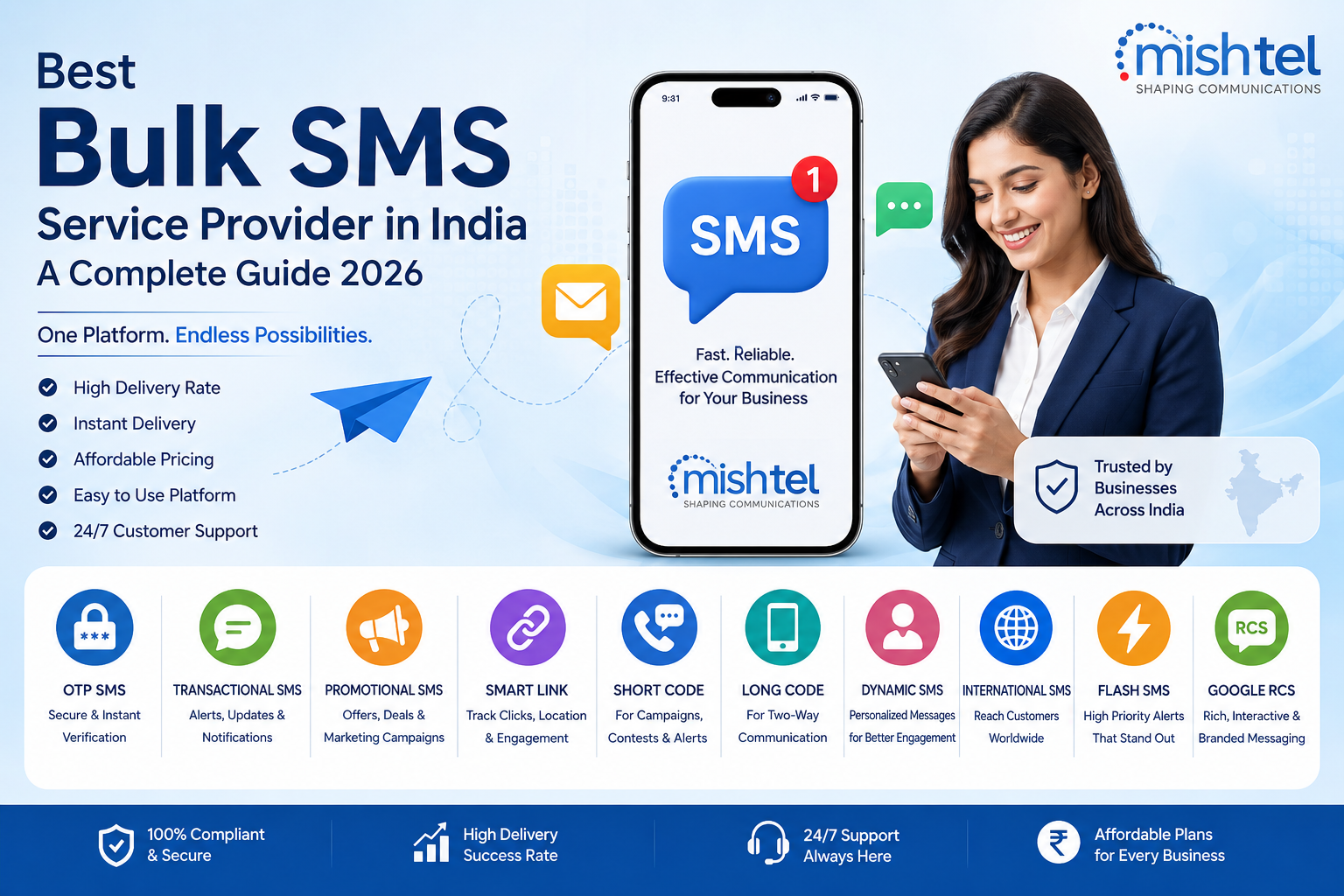
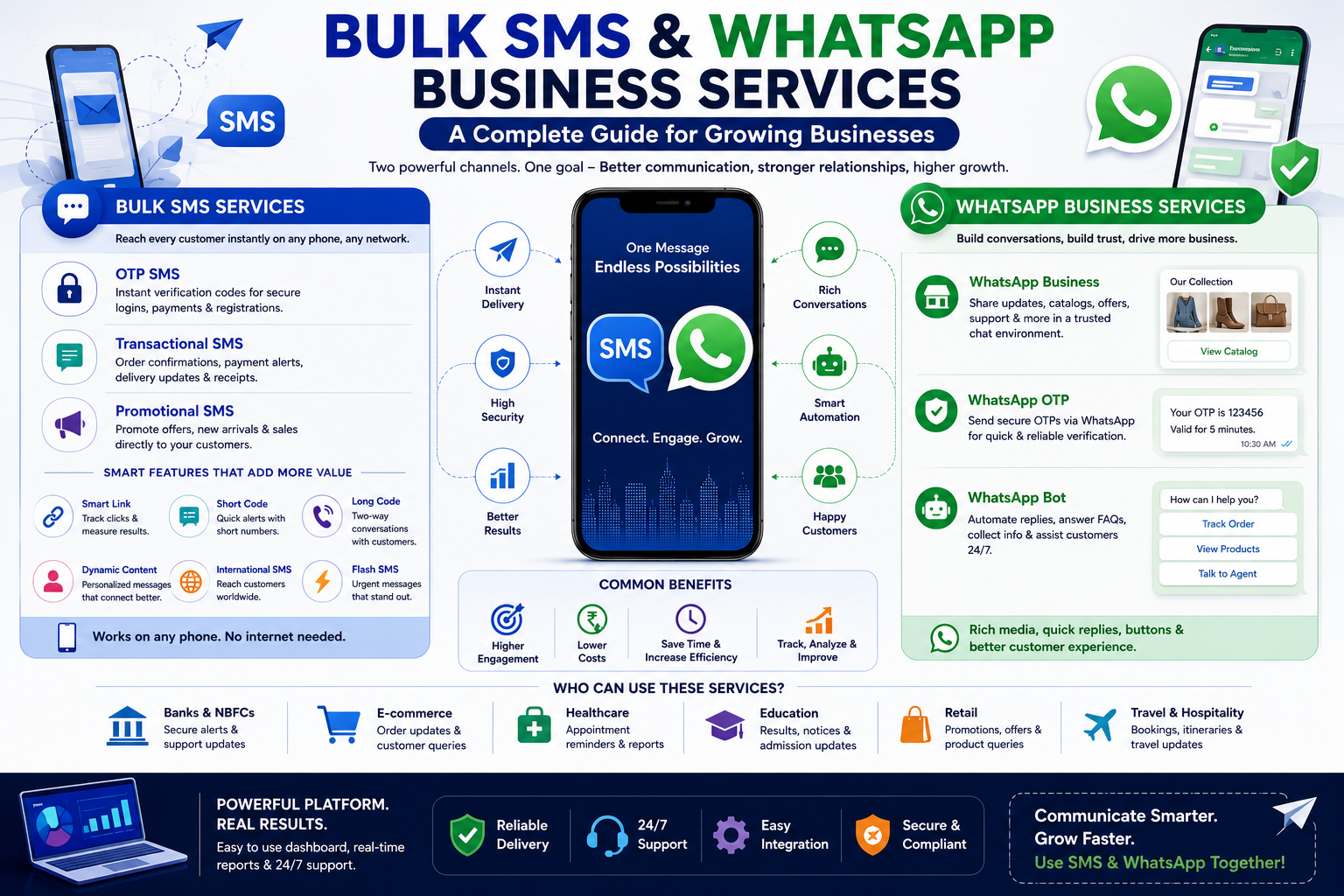
Mishtel offers a complete SMS ecosystem, including:
BULK SMS — for large-scale, dependable messaging
OTP — for fast, secure verification
Transactional — for important customer updates
Promotional — for offers and campaigns
Smart Link — for tracking real engagement
Short Code — for fast, high-volume campaigns
Long Code — for personal, familiar communication
Dynamic — for personalized messaging at scale
International — for reaching customers worldwide
Flash — for urgent, unmissable alerts
Instead of managing separate tools and vendors, businesses get everything in one place, with consistent delivery and simple setup.
13. A Simple Example: How These SMS Types Work Together in Real Life
To see how all these pieces fit, imagine a mid-sized online retail business during a festive sale season.
A customer creates an account and receives an OTP to verify their number. A few days later, they place an order and get a Transactional SMS confirming the purchase, followed by another one when the item ships. Around the same time, the business runs a Promotional campaign announcing a weekend discount, sent through a Short Code to handle the large volume of recipients quickly, with a Smart Link attached so the marketing team can track how many people clicked through to the sale page.
For loyal customers, the business uses Dynamic SMS to personalize the offer, mentioning their name and a discount based on their past purchases. If the retailer also serves customers abroad, an International SMS keeps them updated too, using the same reliable delivery. And if there's a sudden system outage during checkout, a Flash SMS alerts affected customers immediately, so they aren't left confused mid-purchase.
Notice how each message type has a clear, specific job. None of them overlap unnecessarily, and together, they create a smooth, trustworthy experience from the very first sign-up to the final purchase confirmation. This is exactly the kind of coordinated messaging strategy that turns a good SMS setup into a genuinely great one.
Frequently Asked Questions
What is the difference between transactional and promotional SMS? Transactional SMS shares information customers are already expecting, like order updates, while promotional SMS is used to market offers or new products.
Should I use short code or long code for my business? Use short code for large, high-speed campaigns, and long code when you want messaging to feel more personal or support two-way conversations.
Is Flash SMS suitable for regular promotions? No, Flash SMS is best reserved for urgent or time-sensitive alerts, since it interrupts the screen and shouldn't be overused.
Can Dynamic SMS work with OTP messages? Yes, OTP messages are actually a common example of dynamic content, since each code is unique to the recipient.
Do I need International SMS if I only serve local customers today? Not immediately, but it's worth having ready if you plan to expand, since setting it up later is simple with the right provider.
Final Thoughts
SMS may be one of the oldest digital communication tools, but it hasn't lost its edge. It's fast, direct, and reaches nearly everyone, regardless of internet access or device type.
From securing accounts with OTP, to building trust with Transactional updates, to driving sales with Promotional and Smart Link campaigns, to scaling with Short Code, Long Code, Dynamic, International, and Flash messaging, every SMS type plays a specific role in how a business communicates.
Mishtel brings all of these tools together in one dependable platform, helping businesses reach the right customer, with the right message, at exactly the right time.
Explore Mishtel's SMS Solutions:


Write a comment ...